Please watch this incredibly informative webinar with Dr. Linda Kim, Psychiatrist and Founder of Moon Mental Health.
Training hard isn’t enough. Without proper fueling, junior athletes can lose speed, strength, focus, and long-term health. This is RELATIVE ENERGY DEFINIENCY IN SPORTS (REDs). :

- How to recognize early performance red flags before injury occurs
- The minimum fueling thresholds junior squash players require
- Why periods get affected or become irregular for females
- How REDs differs in boys vs. girls
- The connection between energy availability, hormones, and competitive edge
- Practical strategies parents and coaches can implement immediately
- The importance of fueling properly to prevent REDs
- When to seek medical evaluation
This session is led by:
Dr. Linda Kim Sports Psychiatrist | Founder, Moon Mental Health
Dr. Kim specializes in the intersection of mental health and physiological performance in elite athletes. As a sports psychiatrist and a mother of three nationally competitive squash players who have navigated the clinical complexities of REDs, she provides a unique dual perspective on clinical management and parent of competitive athletes.
In high-performance junior squash, success depends on more than skill and grit. True competitive advantage requires:
- Adequate fueling for training load
- Hormonal balance during growth and puberty
- Recovery that supports speed, power, and focus
- Protecting long-term bone health and strength
- Stable mood, cognition, and resilience under pressure
When an athlete’s energy intake falls short of the true demands of training—even by a small margin—the body cannot fully adapt, recover, or build. Over time, performance and health can be affected.
This condition is known as Relative Energy Deficiency in Sport (REDs), as defined by the International Olympic Committee.
It is increasingly seen in driven, high-achieving junior athletes.
THE HIDDEN RISKS OF UNDER-FUELING
REDs affects performance, physical health, and mental health and affects up to 80% of elite athletes.
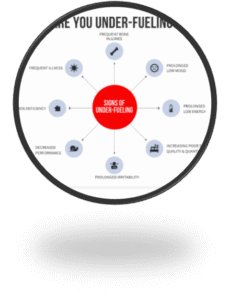
It can present as:
- Slower court speed and decreased endurance
- Recurrent injuries or stress fractures
- Iron deficiency or unexplained fatigue
- Irregular or missed periods in females
- Decreased squash performance
- Mood shifts, anxiety, or reduced focus
- Increased illness frequency
Many athletes appear disciplined and “healthy.”
Parents often assume they are fueling enough.
Yet even a small chronic energy gap can impair metabolism, hormones, bone health, and cognition.
Left unaddressed, REDs can lead to decreased performance and significant health issues.
High-intensity training requires high-intensity fueling. Performance isn’t just about training harder—it’s about building a body strong enough to reach its full potential